
Key Takeaways
- Flexible office memberships, including meeting room rental, offer scalable workspace solutions without long-term commitments.
- Cost efficiency and adaptability enable businesses to allocate resources strategically and respond effectively to workforce needs.
- Employee satisfaction improves through hybrid options, autonomy, and enhanced work-life balance.
- Thoughtfully designed office spaces foster collaboration, innovation, and a strong company culture.
- Technology—encompassing cloud platforms, AI tools, and secure networks—enables seamless integration, both remote and on-site.
- Clear policies and digital infrastructure are essential for managing distributed teams and protecting data.
Introduction
The modern work landscape is rapidly evolving, prompting organizations to seek new solutions that support adaptability and employee well-being. Flexible office memberships take center stage in this transformation, enabling companies to offer workplace options that cater to today’s dynamic business needs. Whether for startups or established enterprises, these memberships enable access to high-quality office spaces without long-term commitments or high upfront costs. For many Massachusetts businesses in particular, the ability to secure a meeting room rental MA as needed has become invaluable to team productivity and professionalism.
This approachable, pay-as-you-need model ensures companies can adjust swiftly—scaling up or down based on project requirements and workforce size. As employers strive to attract and retain top talent, flexible office options offer a compelling advantage in the increasingly competitive employment landscape.
The Shift Towards Flexibility
The preference for flexibility is more than a passing trend; it is redefining the very structure of corporate real estate. Survey data underscore this shift toward adaptability. The Scoop Flex Index, for example, found a decrease in companies that insist on full-time office attendance, plummeting from 49% at the start of 2023 to just 38% by year’s end. The implication is clear: flexible office memberships now play a crucial role in shaping where and how work is done.
This approach not only aligns with employee preferences for hybrid work but also helps organizations future-proof their operations against market fluctuations and global disruptions. Businesses have learned from recent years that their ability to adapt will directly impact resilience and growth.
Benefits of Flexible Office Memberships
- Cost Efficiency: By trading long-term leases for flexible agreements, businesses can save on rent, utilities, and maintenance, allocating more resources to growth rather than overhead.
- Scalability: Flexible office arrangements empower companies to expand during peak seasons or scale back in slower periods, avoiding the trap of excess, unused space.
- Enhanced Employee Satisfaction: The freedom to choose when and where to work helps boost morale, improve work-life balance, and increase employee retention, as noted by recent Forbes reporting on future-of-work trends.
Impact on Company Culture and Productivity
The flexible office movement is fostering a new breed of company culture built on trust, collaboration, and intentional in-person interactions. A WeWork survey notes that 86% of business leaders anticipate the physical office will become even more vital to their organization’s culture and profitability in the next five years. While remote and hybrid practices reduce daily commutes, thoughtfully designed office experiences foster spontaneous collaboration, mentorship, and innovation.
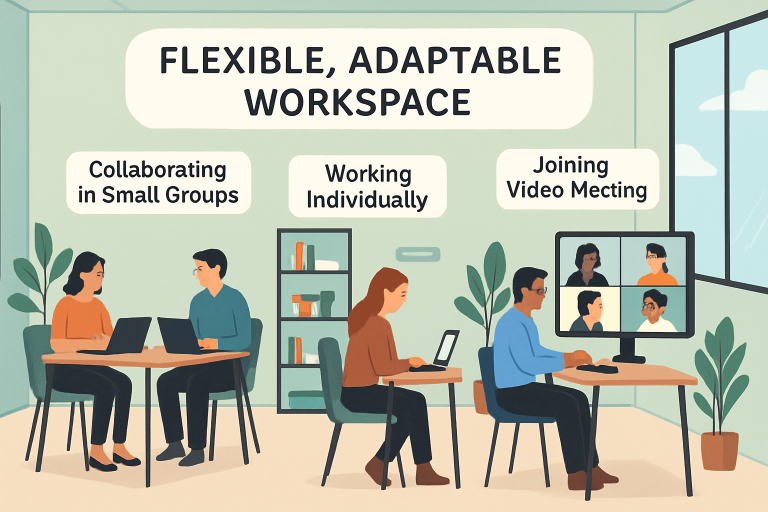
This balanced approach acknowledges two truths: flexibility is crucial for satisfaction, but shared spaces remain key to driving team synergy and creative breakthroughs.
Designing for the Future
To make office visits “commute-worthy,” organizations are investing in amenities and environments that genuinely enhance the workday experience. Modern flexible offices often include modular layouts, wellness and quiet rooms, tech-enabled conference facilities, and vibrant communal spaces. This design philosophy is attracting employees back to the office and supporting a seamless transition between remote and on-site work.
Flexible office providers are quick to adapt to trends, implementing interior elements that maximize both collaboration and focused individual work. These features help reinforce the organization’s values, making the office an extension of the company’s culture and brand.
Technology and the Flexible Workspace
Technological innovation is essential for enabling effective and flexible work arrangements. Cloud-based collaboration platforms, AI-powered scheduling and communication tools, secure virtual networks, and digital resource management ensure that teams remain connected and efficient, regardless of their physical location. In fact, a recent Gallup study indicates that over half of all employees believe that artificial intelligence will eventually make physical offices obsolete, highlighting the ongoing transformation in workplace technology.
The ability to effortlessly integrate digital meetings with on-site collaboration underscores the importance of investing in the right tools. As these technologies evolve, so too will our expectations about where and how work gets done.
Challenges and Considerations
Despite their numerous advantages, flexible office memberships do not come without hurdles. Managing distributed teams, sustaining company culture remotely, and protecting data security require strategic oversight and investment in digital infrastructure. Companies must create clear policies and practical guidelines to ensure the benefits of flexibility are not undermined by uncertainty or inconsistency.
Balancing autonomy with clearly defined expectations is crucial for fostering team cohesion and ensuring individual accountability. Thoughtful planning helps employers address risks, ensuring secure, inclusive, and productive flexible work experiences for all.
Final Thoughts
The work environment of tomorrow will look profoundly different from the past. Flexible office memberships provide the adaptability, efficiency, and employee-centered advantages organizations need to thrive amid uncertainty. By embracing flexible workplace models, companies can elevate culture, foster innovation, and create workplaces that are as resilient as they are productive.


