Category: Business

Why Flexible Office Memberships Are the Future of Work


Key Takeaways

  • Flexible office memberships, including meeting room rental, offer scalable workspace solutions without long-term commitments.
  • Cost efficiency and adaptability enable businesses to allocate resources strategically and respond effectively to workforce needs.
  • Employee satisfaction improves through hybrid options, autonomy, and enhanced work-life balance.
  • Thoughtfully designed office spaces foster collaboration, innovation, and a strong company culture.
  • Technology—encompassing cloud platforms, AI tools, and secure networks—enables seamless integration, both remote and on-site.
  • Clear policies and digital infrastructure are essential for managing distributed teams and protecting data.

Introduction

The modern work landscape is rapidly evolving, prompting organizations to seek new solutions that support adaptability and employee well-being. Flexible office memberships take center stage in this transformation, enabling companies to offer workplace options that cater to today’s dynamic business needs. Whether for startups or established enterprises, these memberships enable access to high-quality office spaces without long-term commitments or high upfront costs. For many Massachusetts businesses in particular, the ability to secure a meeting room rental MA as needed has become invaluable to team productivity and professionalism.

This approachable, pay-as-you-need model ensures companies can adjust swiftly—scaling up or down based on project requirements and workforce size. As employers strive to attract and retain top talent, flexible office options offer a compelling advantage in the increasingly competitive employment landscape.

The Shift Towards Flexibility

The preference for flexibility is more than a passing trend; it is redefining the very structure of corporate real estate. Survey data underscore this shift toward adaptability. The Scoop Flex Index, for example, found a decrease in companies that insist on full-time office attendance, plummeting from 49% at the start of 2023 to just 38% by year’s end. The implication is clear: flexible office memberships now play a crucial role in shaping where and how work is done.

This approach not only aligns with employee preferences for hybrid work but also helps organizations future-proof their operations against market fluctuations and global disruptions. Businesses have learned from recent years that their ability to adapt will directly impact resilience and growth.

Benefits of Flexible Office Memberships

  • Cost Efficiency: By trading long-term leases for flexible agreements, businesses can save on rent, utilities, and maintenance, allocating more resources to growth rather than overhead.
  • Scalability: Flexible office arrangements empower companies to expand during peak seasons or scale back in slower periods, avoiding the trap of excess, unused space.
  • Enhanced Employee Satisfaction: The freedom to choose when and where to work helps boost morale, improve work-life balance, and increase employee retention, as noted by recent Forbes reporting on future-of-work trends.

Impact on Company Culture and Productivity

The flexible office movement is fostering a new breed of company culture built on trust, collaboration, and intentional in-person interactions. A WeWork survey notes that 86% of business leaders anticipate the physical office will become even more vital to their organization’s culture and profitability in the next five years. While remote and hybrid practices reduce daily commutes, thoughtfully designed office experiences foster spontaneous collaboration, mentorship, and innovation.
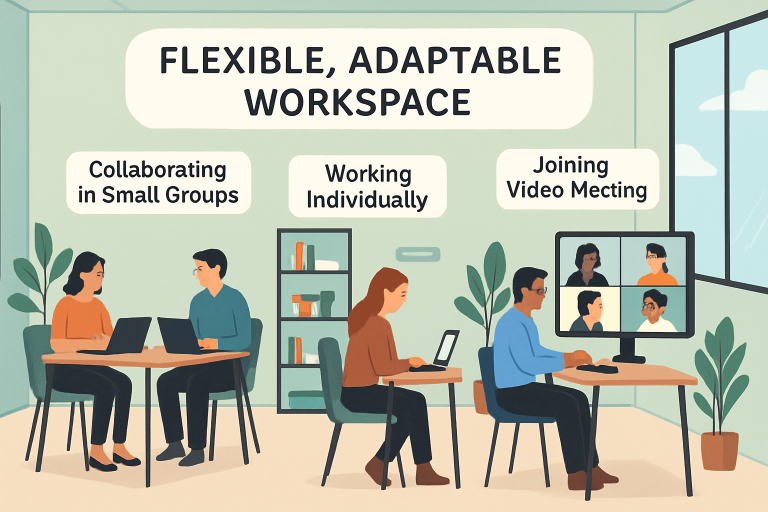
This balanced approach acknowledges two truths: flexibility is crucial for satisfaction, but shared spaces remain key to driving team synergy and creative breakthroughs.

Designing for the Future

To make office visits “commute-worthy,” organizations are investing in amenities and environments that genuinely enhance the workday experience. Modern flexible offices often include modular layouts, wellness and quiet rooms, tech-enabled conference facilities, and vibrant communal spaces. This design philosophy is attracting employees back to the office and supporting a seamless transition between remote and on-site work.

Flexible office providers are quick to adapt to trends, implementing interior elements that maximize both collaboration and focused individual work. These features help reinforce the organization’s values, making the office an extension of the company’s culture and brand.

Technology and the Flexible Workspace

Technological innovation is essential for enabling effective and flexible work arrangements. Cloud-based collaboration platforms, AI-powered scheduling and communication tools, secure virtual networks, and digital resource management ensure that teams remain connected and efficient, regardless of their physical location. In fact, a recent Gallup study indicates that over half of all employees believe that artificial intelligence will eventually make physical offices obsolete, highlighting the ongoing transformation in workplace technology.

The ability to effortlessly integrate digital meetings with on-site collaboration underscores the importance of investing in the right tools. As these technologies evolve, so too will our expectations about where and how work gets done.

Challenges and Considerations

Despite their numerous advantages, flexible office memberships do not come without hurdles. Managing distributed teams, sustaining company culture remotely, and protecting data security require strategic oversight and investment in digital infrastructure. Companies must create clear policies and practical guidelines to ensure the benefits of flexibility are not undermined by uncertainty or inconsistency.

Balancing autonomy with clearly defined expectations is crucial for fostering team cohesion and ensuring individual accountability. Thoughtful planning helps employers address risks, ensuring secure, inclusive, and productive flexible work experiences for all.

Final Thoughts

The work environment of tomorrow will look profoundly different from the past. Flexible office memberships provide the adaptability, efficiency, and employee-centered advantages organizations need to thrive amid uncertainty. By embracing flexible workplace models, companies can elevate culture, foster innovation, and create workplaces that are as resilient as they are productive.


How Link Building Can Improve Your E-Commerce Site’s Rankings and Sales

Link building is a crucial part of search engine optimization. Whether you’re an e-commerce site or another type of business, it’s essential to have quality links pointing to your website. The more relevant your links are to your target audience, the more effective they will be.

Increased Traffic

Link building services in USA is an important SEO strategy to help your e-commerce site increase its rankings and sales. But, it can be a tricky process to get started with:

  1. It would be best if you determined your e-commerce link-building goal. A good link acquisition goal should be to secure links from authoritative, high-quality content pages.
  2. You want to build your links with the correct anchor text. The anchor text is the text that the link points to, and it’s an important signal for search engines like Google.
  3. You want to target content pages with a high Domain Authority and Page Authority.

These factors can make or break a link acquisition campaign. Once you’ve determined your link-building goal, it’s time to build your assets. Create resources like blog posts, infographics, images, videos, and PDFs that are shareable, relevant to your industry, and valuable to other publishers. Then, start contacting websites you think would be interested in linking to your new asset.

Increased Conversions

One of the most crucial goals of any e-commerce site is to convert visitors into sales. When your traffic numbers rise, that can be difficult to achieve, but your conversions seem to stall. Link building can help improve your e-commerce site’s rankings and sales by bringing in more quality traffic from organic searches. This can lead to more sales and even more revenue. However, link building can be tricky to implement for some businesses. Finding the time and resources to create a comprehensive SEO strategy may take a lot of work if you’re a small business owner. Alternatively, you could employ the services of a professional SEO agency. This will ensure that you use the most effective strategies for your e-commerce site. Many different tactics can be used for link-building in e-commerce. These include reciprocal linking, guest posts, and business directories. These techniques can benefit your website, but only if you use and test them carefully.

Increased Revenue

Link building is critical to search engine optimization (SEO) and essential for e-commerce sites. Links are seen as a “vote of confidence” by Google, and they can help your site’s rankings and increase your revenue. One of the best ways to build links is to create valuable content that other publishers will find helpful. This content includes blog posts, in-depth guides, videos, images, calculators, and other resources. Another great strategy is to approach relevant websites in your niche and ask if they would be interested in featuring a post on their site. For example, if your business sells camping gear, you can contact sites that discuss safety issues and ask them to share your information with their audience. While this strategy can be complicated for e-commerce companies, it’s a great way to increase brand awareness and build credibility. It also increases your link equity and helps improve your domain authority, which can increase your ranking on SERPs.

Increased Brand Awareness

When a respected brand links to your website or the content, it tells Google and other search engines that you’re an authority on a subject. This can increase your DA (domain authority) score and search engine rankings. Another benefit of link building is referral traffic. This web traffic comes from other websites that need to use Google to find you. This type of traffic can improve your search engine rankings and lead to organic (non-paid) sales. Link building also includes internal links that send users from one page on your domain to the next. These links help users and search engines navigate your site easily, establish the information hierarchy for your site, and spread link equity around your website.

The Reason Why Everyone Loves a Sign Company

The reason why everyone loves a sign company is because of their ability to create great-looking signs. They are a fantastic addition to any business and can help bring in more customers. A great sign entices the consumer to visit and can also make them happy to have the experience. This is a good thing you should remember when choosing your next sign company.

Interior signs expand the branded experience

Interior signs like in sign company Austin play a considerable role in the overall presentation of your business. Whether it is a retail store, a restaurant, or a hotel, they have a significant impact on customer perception. A well-designed signs cape can increase sales and staff retention.

In addition to a clear message, your signage should also provide customers with important information. For instance, use signage to point out current promotions or popular products. If you advertise a product for sale, you should put a price on the sign.

The best signs for branding include neon signs, window graphics, and wall graphics. These options can be used to showcase product images, particular messages, or a company’s mission statement. Signs can be customized to reflect your brand’s color palette and logo.

Consider putting an interior sign on your front door to help draw pedestrians in. This is especially helpful for attracting customers who are tired or jet-lagged.

Another advantage of interior signs is that they can liven up empty walls and doors. A simple backlit cutout can add some pizazz to your signage. Backlit cutouts are eye-catching and take advantage of bright colors.

Wayfinding signs are a great way to keep your customers from getting lost in your business. They can provide directions to the bathrooms, elevators, and other essential spaces.

Signs increase sales

Signs increase sales, especially when they are designed correctly. A well-designed sign will not only catch the customer’s eye, but it can also improve their experience at your business.

Using exciting shapes or colors can increase a sign’s ability to attract attention. You can also make your sign stand out by placing a light behind it.

Signs are a great way to increase awareness of your product line, special offers, or new services. They can also be an excellent way to inform customers of changes in management, upcoming events, and upcoming product launches.

If you are a small business owner, you may not be able to afford a large-scale signage project, but you can still use the power of visuals to get your business noticed. For instance, your website could display photos of past signage projects. Or you can create a Facebook, Twitter, or LinkedIn profile.

You should use social media marketing to increase traffic to your site. It can also give you a better ranking on search engines. Social media can effectively build brand loyalty, gain customer trust, and create a solid foundation for future marketing campaigns.